Your AI Agent Is Not a Coworker
Published on
Calling your AI agent a "coworker" is making your team worse at their jobs. New HBR research confirms it.
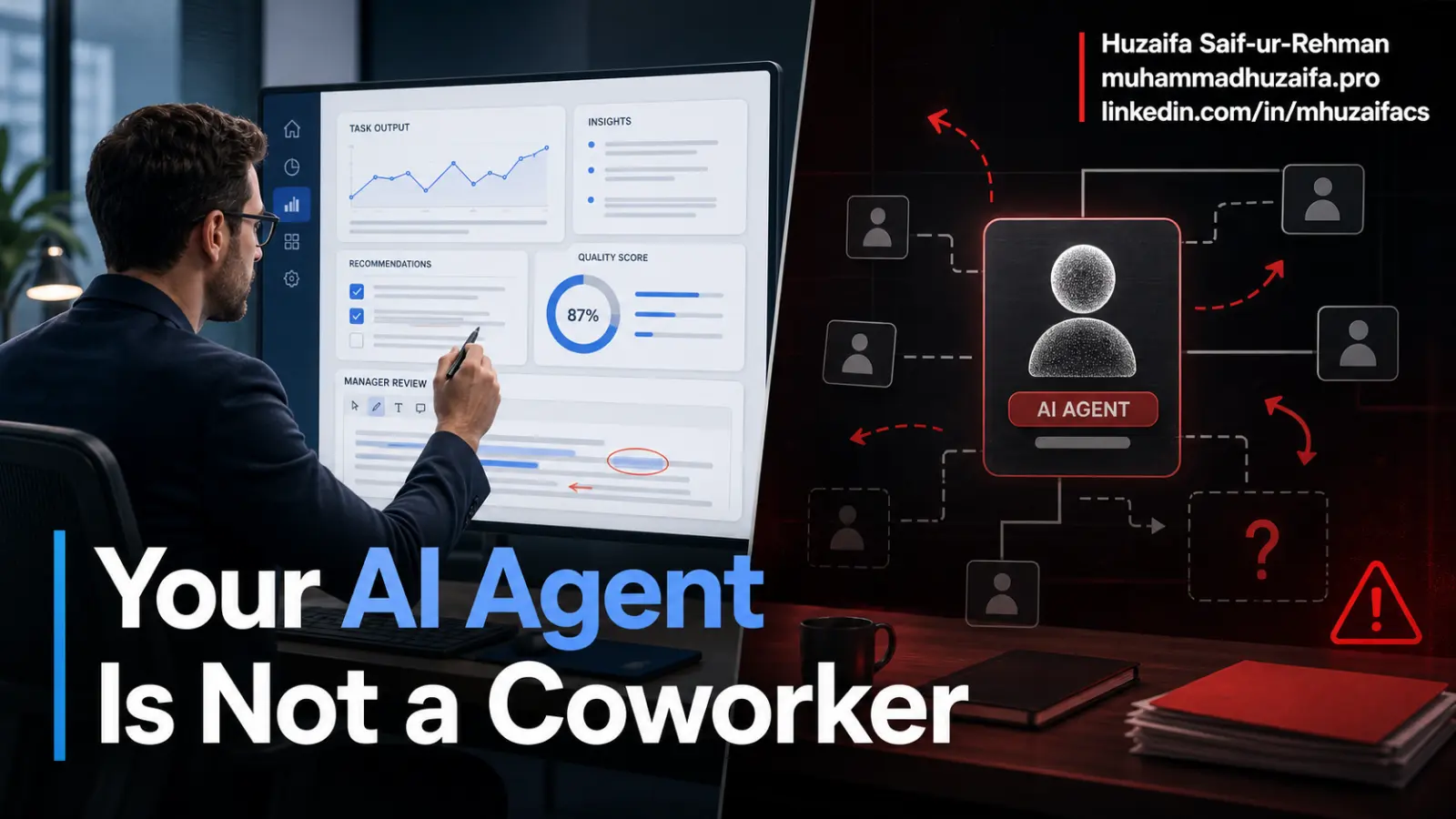
Boston University's Emma Wiles ran a study where managers reviewed work output. When the work was attributed to an "AI employee" rather than a software tool, participants caught 18% fewer errors. They were 44% more likely to escalate questionable work to a human manager instead of correcting it themselves. The employee label inverted responsibility: if Alex the agent owns the work, the human stops owning quality.
The scale of this matters. Thirty-one percent of 1,261 surveyed managers say their companies frame AI agents as employees. Twenty-three percent list agents on official org charts. Every major AI vendor now markets agent management tools as "digital colleagues."
Stanford researchers asked 1,500 workers across 104 jobs what AI assistance they actually wanted. The answers were often the opposite of what tech experts assumed. Law clerks wanted help tracking case progress across matters, not replacing legal reasoning. Sales reps specifically did not want AI verifying credit ratings. The people doing the work know where the tool fits.
Nobel laureate Daron Acemoglu summarized it: "AI agents are being marketed as things that can replace humans ... that's just a losing proposition."
For engineering leads deploying agent infrastructure: frame the agent as a tool, not a teammate. The interface should make accountability inescapable. When your team treats agents as colleagues, they catch fewer errors and offload judgment to software. That is not collaboration. That is abdication.